Mitigation
Lorem ipsum
Lorem ipsum
Pump Storage Hydro
With the electric grid increasingly reliant on intermittent renewable sources of generation there has been an upsurge in interest in pump storage hydro in recent years, as it is a proven form of energy storage. Until recently the growth of pump storage hydro has been slow with only four schemes in the UK, the first being the Cruachan Scheme, which was developed on Loch Awe in the 1960s. Recently a number of pump storage schemes have been proposed, with a tsunami of interest in developing pump storage hydro in Loch Ness.
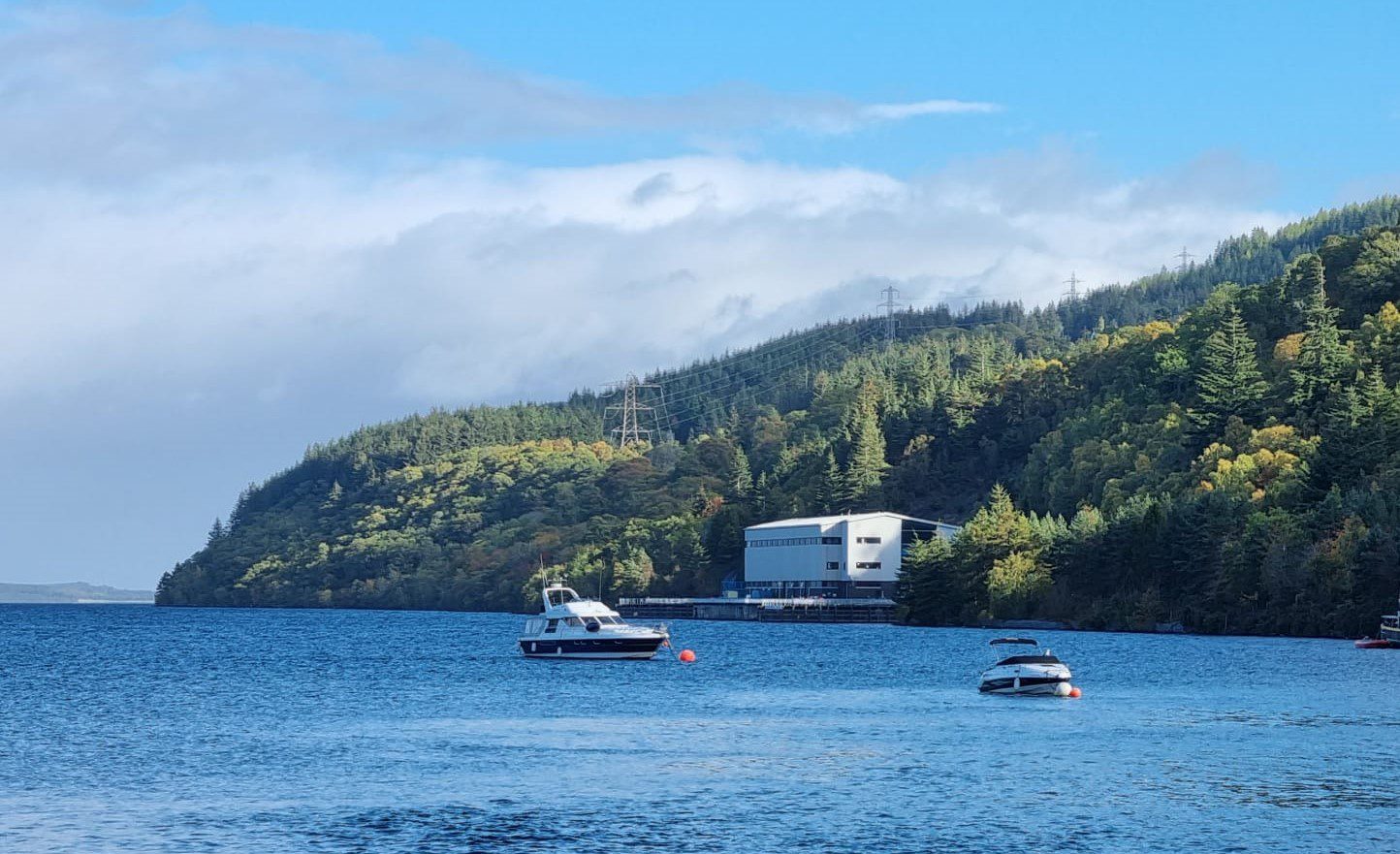
Loch Ness already has one pump storage hydro scheme, Foyers PSH on the east shore of Loch Ness was built in the 1970s and in 2021 the Red John scheme was granted planning permission for a location at the Dores end of Loch Ness. Construction of Red John has yet to commence but another developer has proposed another PSH site on the same east shore of Loch Ness.
The political climate for the development of PSH is currently very favourable with the recently published National Planning Framework 4 creating what appears to be a presumption in favour of this form of energy storage.
So, what it the problem with PSH? The Ness DSFB have a number of concerns:
- the primary concern is that daily abstraction, and return, of huge volumes of water at multiple locations along the east shore of Loch Ness is almost certain to have an impact on smolt migration. Salmon smolts trying to find their wayout of Loch Ness will be attracted to the PSH intakes during abstraction. They are unlikely to be sucked up, the screens will be appropriated sized, but smolts are almost certain to be attracted to the intakes, where they will be delayed, and likely to be exposed to high levels of predation. There is no published work investigating this issue, and we know that smolts already find it difficult to find their way out of lochs.
- during an abstraction cycle Foyers varies the level of Loch Ness by up to 87mm (3.5”), Red John will have a similar efffect, as it the third proposed scheme. The cumulative effect of three schemes on Loch Ness will be a daily drawdown of over 260mm (10.5”). This will have a significant impact on flows down River Ness. The same developer is talking about a potential fourth scheme on Loch Ness which will have the same capacity as the other three combined and the total daily drawdown will be “up to 1m”. Not only will daily drawdown on this scale effectively sterilise the shoreline of Loch Ness, the arrival of multiple pump storage schemes will mean that both Loch Ness, and the River Ness, will be at extreme low water levels more frequently, and for longer duration. Examples of this were seen in 2023. In May 2023, the level of Loch Ness reached a record low, due to abstraction by pump storage hydro under low water conditions. In another example of the adverse environmental impact of pump storage hydro occurred in June 2023 when the level of River Ness dropped by 100mm overnight and up to 150mm over the course of a few days. This caused the Holm Mills lade to drying up, resulting in a large fish kill, which would have been much worse had the Ness DSFB and the Inverness Angling Club not quickly organised a fish rescue in the remaining pools. This control over loch and river levels would not occur if not for the pump storage hydro industry
- We are concerned that multiple PSH in Loch Ness will raise the temperature of Loch Ness itself, and the upper storage reservoirs. Published papers studying a PSH scheme in Switzerland concluded this would be the case.
Others will no doubt have other concerns about these developments but as far as we are concerned there should be no further PSH on Loch Ness until concerns about the impacts on the Ness salmon population, and other ecological interests, are understood. This is also about more than salmon. In the Moray Firth, at Chanonry Point, a world class wildlife spectacle occurs on a daily basis during the spring and summer. At the Point, bottlenose dolphins wait to ambush migrating salmon, and the feeding spectacle attracts visitors from far and wide. According to David Attenborough, Chanonry Point was “the best place in the world to view this type of dolphin behaviour”. In the salmon of the Ness, there can be few better examples of an ecosystem in operation. We should cherish and nurture our natural environment, it will be of value to us long after PSH has become obsolete and its place taken by new technology.