
This week the NDSFB received reports that the remains of an unusual looking fish had been found in the River Ness at Dochfour. The fish was positively identified as an adult sea lamprey (Petromyzon marinus L.) which, although relatively common place in the Ness system, are rarely seen.
Dochfour ghillie Grant Sutherland with the remains of the sea lamprey (Photograph by Chris Conroy)

The lampreys (family Petromyzonidae, stone suckers) belong to the group Agnatha which means ‘jawless’ and are the most primate of all living vertebrates. They are not true fish and have no lower jaw and a mouth that is surrounded by a round, sucker like disc with horny rasping teeth.
Mouth surrounded by a round, ‘sucker-like’ disc containing sharp rasping teeth (Photograph by Chris Conroy)

They are eel like in shape and have no scales or bones with all the skeletal structures being made up of cartilage. The adults have two fins on their backs, which are often continuous with the long tail fin. The gill pores, one row on each side of the head, are not covered.
Close up of the gill pores of the sea lamprey (Photograph by Chris Conroy)

The sea lamprey (Petromyzon marinus L.) is the largest of those found in Britain and is known to reach lengths of up to 100cm. Until recently it was thought to be absent from many northern rivers and had become extinct in many southern ones due to pollution. Because of this decline it is listed in annexes IIa and Va of the Habitats Directive, Appendix III of the Bern Convention and as a Long List Species in the UK Biodiversity Action Plan. Recently reports of sea lamprey have been on the increase with individuals even being recorded returning to the Thames.
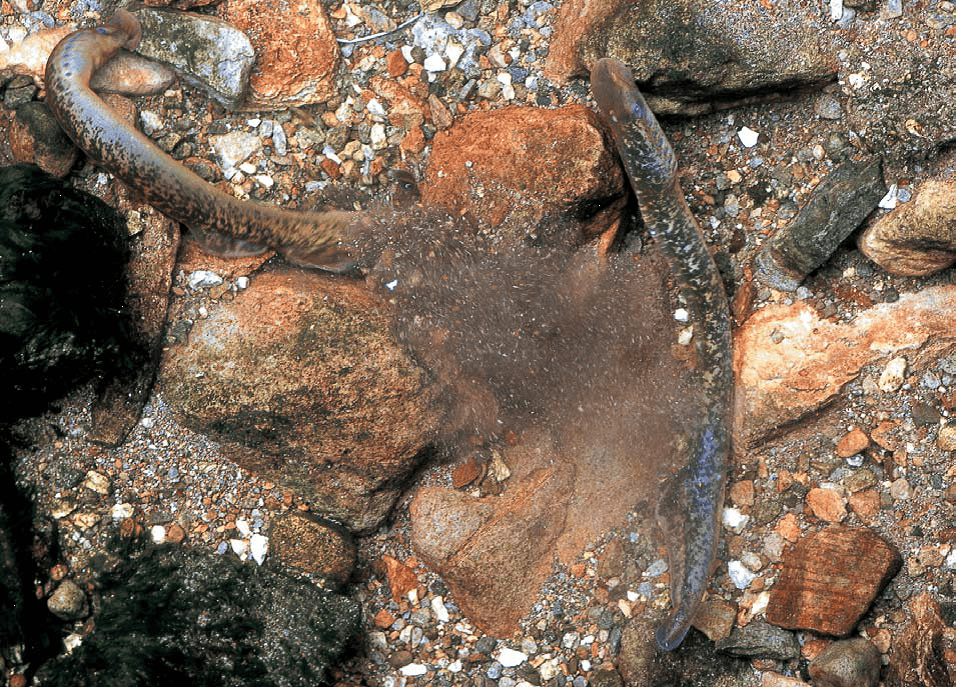
Adult sea lampreys stop feeding and migrate upstream into freshwater from April before spawning in late May or June when the water temperature reaches 15oC. They spawn in pairs or groups and lay their eggs in nests in gravelly stretches of running water. These look very similar to salmon ‘redds’ and consist of depressions created by lifting away small stones with their mouths. All adults die after spawning.
Spawning sea lamprey (Photograph by Erling Svenson from Maitland, 2003)
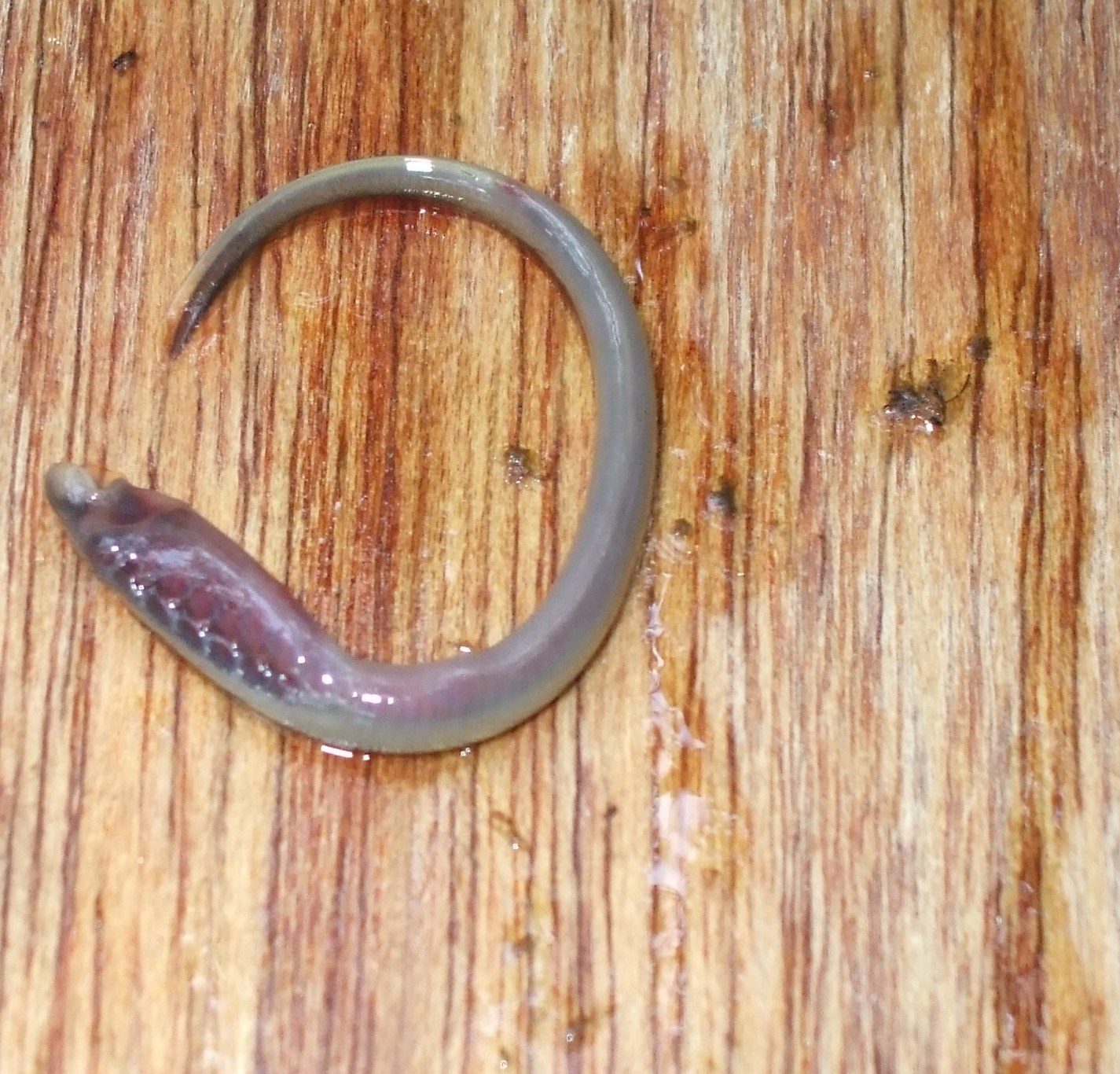
After hatching larvae (known as ammocoetes) swim or are washed downstream to areas of sandy silt where they burrow and spend approximately five years in tunnels feeding on organic matter (and associated bacteria), plants and diatoms. They metamorphosis into adults between July and September and migrate to the sea.
Lamprey ammocoete from the Ness system (Photograph by Keith Williams)
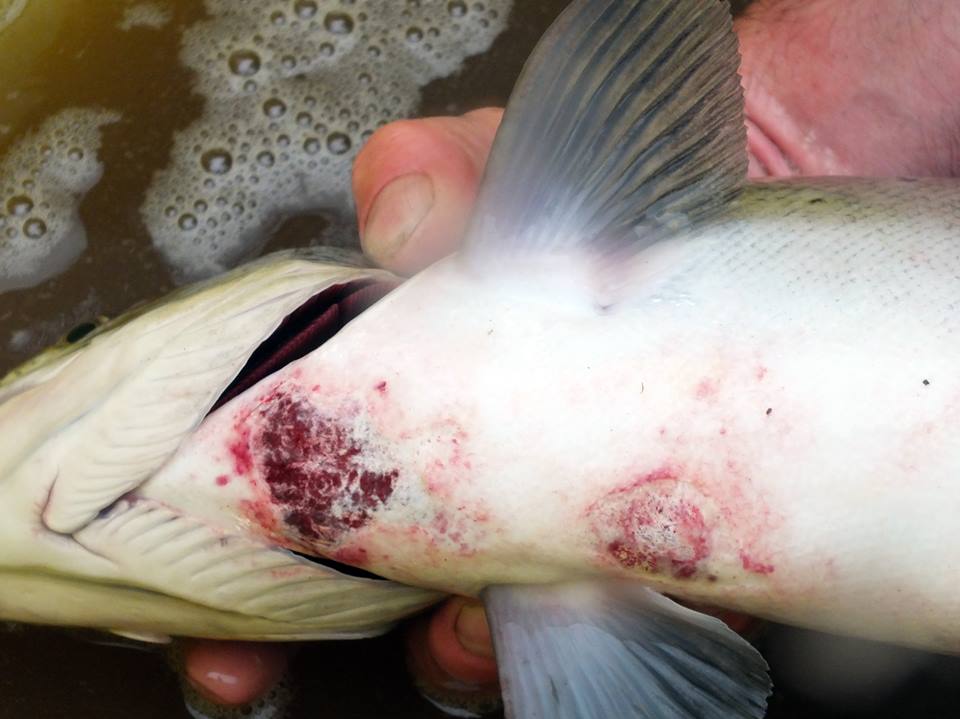
Here they feed on the blood of various prey species of fish including sturgeon, herring, salmon, haddock and basking shark. The lamprey use their sucker-like mouth to attach to the skin of a prey fish and then rasp away tissue with their sharp teeth. Secretions in the lamprey’s mouth prevent the blood of the prey item from clotting.
Typical sea lamprey damage on an adult salmon captured during a fish rescue at Catrine Dam (Photograph by Stuart Brabbs, Ayrshire Rivers Trust)
 We would be interested to hear about any other sighting of these fascinating fish, or of any lamprey marked salmon. Please send reports or photographs to the NDSFB at ceo@ndsfb.org.
Maitland PS (2003). Ecology of the River, Brook and Sea Lamprey. Conserving Natura 2000 Rivers Ecology Series No. 5. English Nature, Peterborough.